Understanding the Data Recovery and Restore Lifecycle
Review the End to End Disaster Recovery and Restore Lifecycle and its components that make up for the data recovery and restore phases.
This flow details how the secondary target cluster discovers backups, cleans resources, restores data, and applies cluster-specific re-configurations.
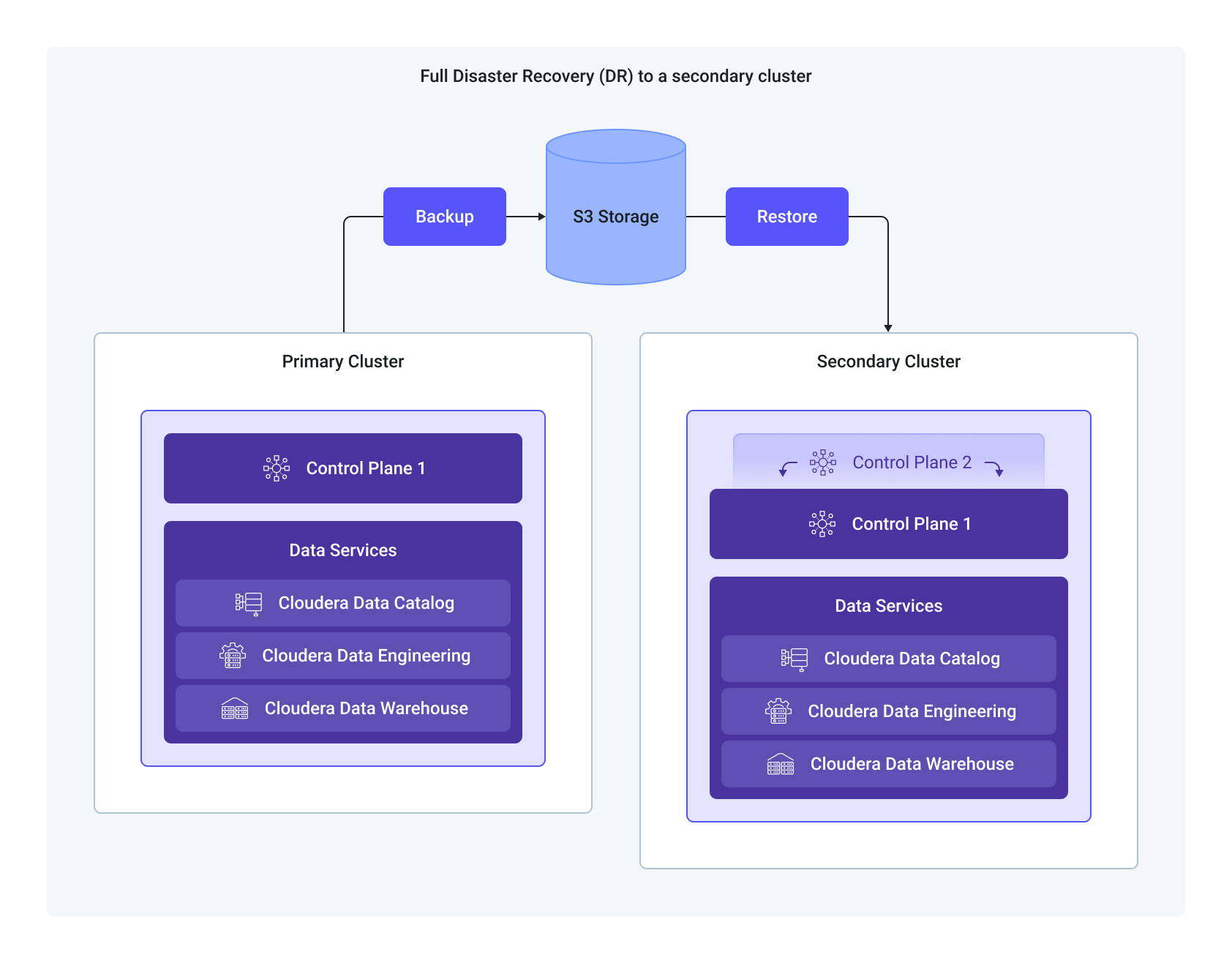
Execution workflow
- Discovery and Selection: The administrator reads available backup entities directly from externalized S3 metadata.
- Pre-Restore operations: Local secondary cluster configurations (Control Plane URLs, FQDNs, and Ingress rules) are captured into local memory/secrets.
- Restoration engine:
- Target cluster namespaces defined in the backup are cleaned.
- K8s manifests, secrets, and Persistent Volumes are pulled from S3 and restored as-is.
- Post-Restore and Cluster Re-hydration:
- Cloudera Control Plane Post-Restore: Updates restored manifests with secondary cluster FQDN/URLs. The restored Vault secret is used to unseal the Vault instance.
- Environment and Cloudera Manager Updates: If the Cloudera Base on premises cluster details/credentials are changed, then the environments (or environment objects) are updated.
- Data Services Post-Restore: Post restore refresh tasks from participating data services are then invoked (For example, certificate regeneration, internal URL updates).