Product Release Notes - August, 2024
Learn about the Upstream and Downstream Impact Analysis for cross-system lineage, a powerful enhancement designed to streamline your impact assessment process.
Introduction of upstream and downstream impact analysis for cross-system lineage
Use cases and value proposition
-
Change management
- Scenario: Before implementing changes to a critical table, you need to assess potential impacts to avoid unintended disruptions.
- Value: By using upstream and downstream impact analysis, you can quickly identify all dependencies and assess risks, reducing the chance of errors and minimizing downtime.
- ROI: Preventing a single critical error can save your organization significant time and costs associated with recovery, making the analysis an invaluable tool in maintaining system stability.
-
Ticket resolution
- Scenario: When resolving an issue reported in a ticket, understanding the root cause and its potential effects on other parts of the system is crucial.
- Value: This feature allows you to trace issues back to their source (upstream) and foresee any further complications (downstream), leading to faster and more accurate resolutions.
- ROI: Quicker ticket resolution translates to reduced downtime, higher user satisfaction, and lower operational costs.
Implementing upstream and downstream impact analysis provides substantial ROI by:
- Reducing downtime: Quicker identification of potential impacts leads to faster resolutions and less system downtime.
- Mitigating risk: Comprehensive analysis ensures that potential issues are identified and addressed before changes are implemented, reducing the risk of costly errors.
- Enhancing productivity: Streamlined processes for both change management and ticket resolution mean your team can focus on higher-value tasks, improving overall productivity.
This feature is an essential addition to your toolkit, empowering you to manage changes and resolve issues with confidence and precision.
Key features
-
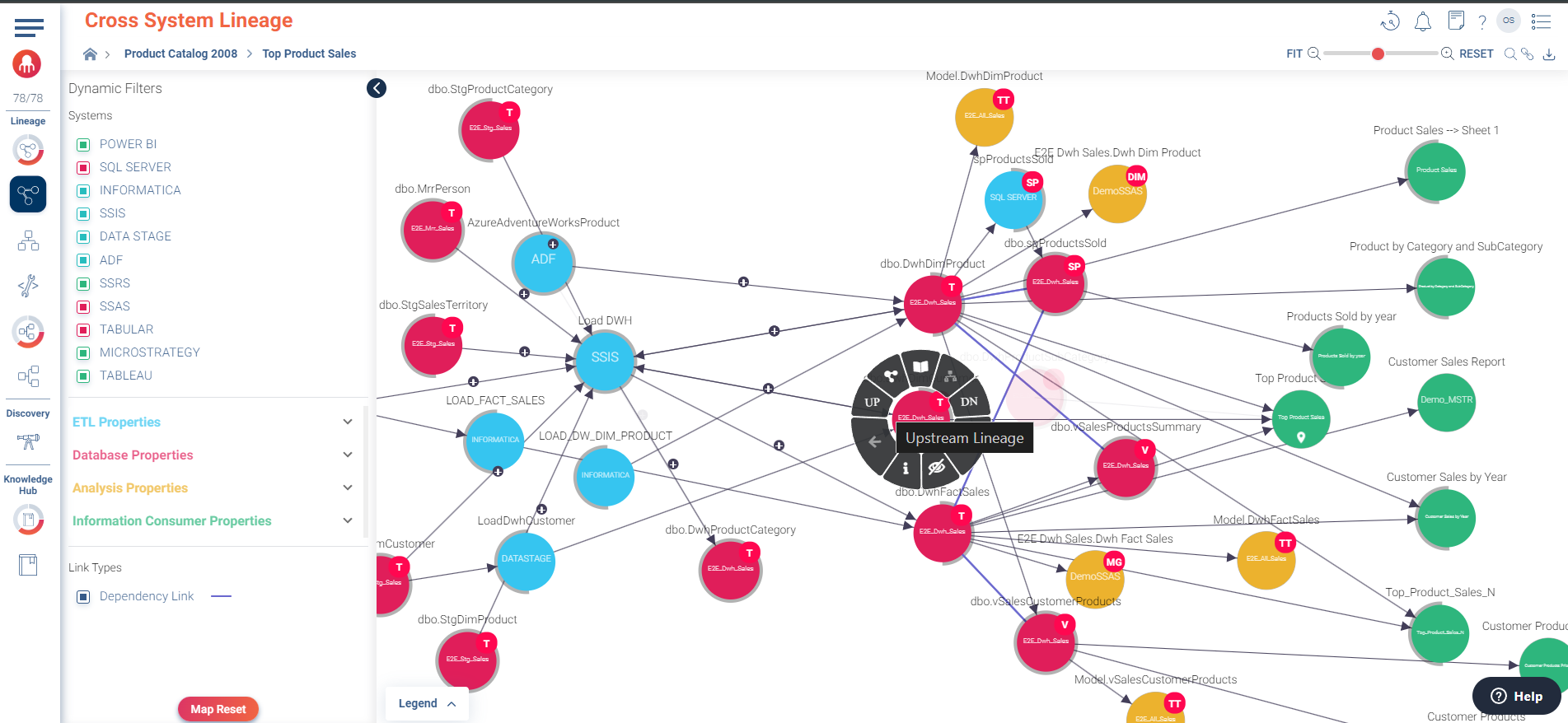
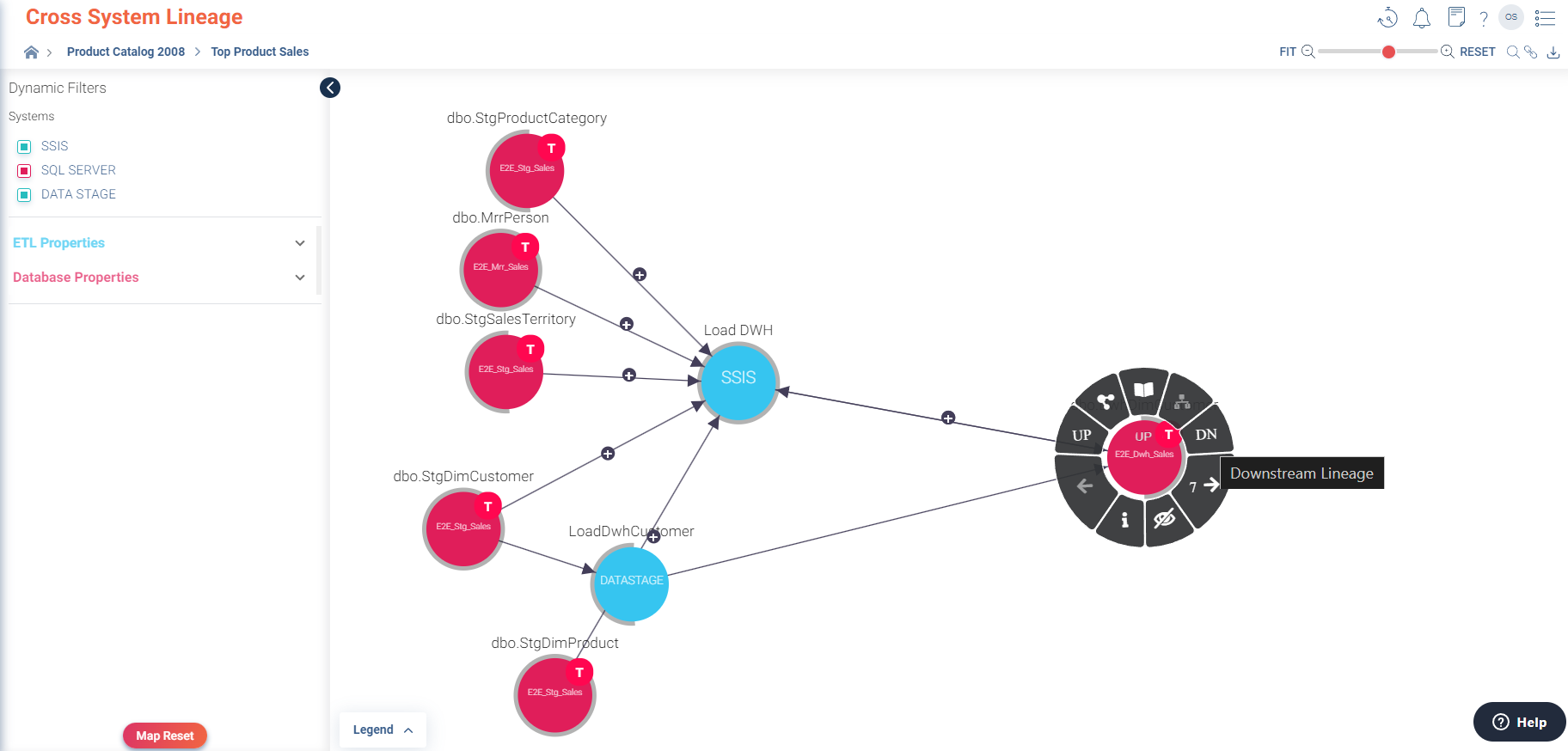
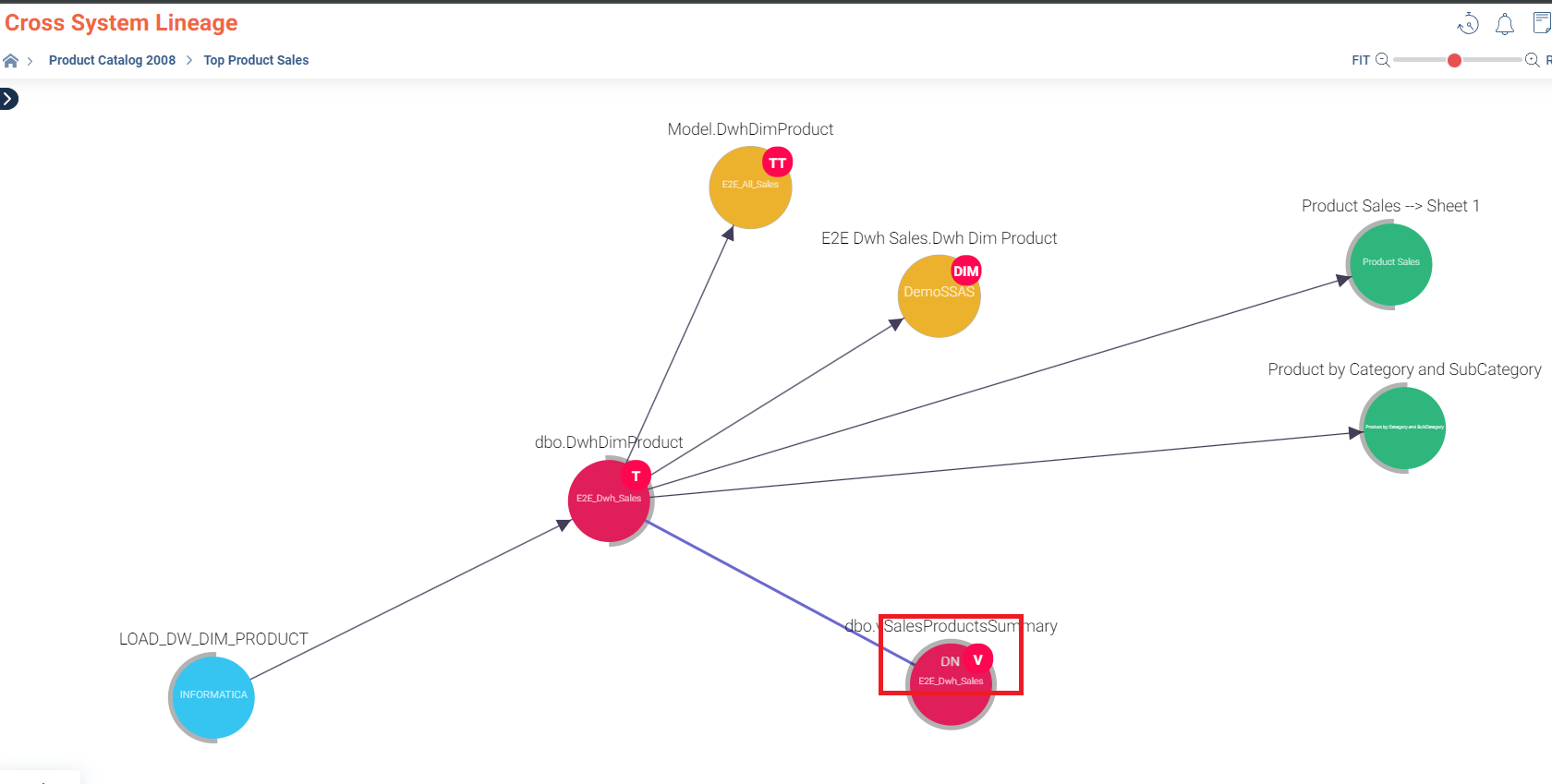
Upstream and downstream analysis: When you receive a ticket or need to apply a change—such as modifying a table—you can now effortlessly assess the risk of the impact both upstream and downstream. With a simple action, you can visualize the potential effects or causes throughout the lineage, enabling you to make informed decisions with ease.
-
Reciprocal impact visibility: Objects that are affected in both upstream and downstream directions will be visible in both types of analysis, ensuring comprehensive coverage of all potential impacts.
-
Intelligent action disabling: If the options to analyze upstream (UP) or downstream (DN) impacts are disabled, it indicates that the map already contains the analysis.
- Upstream analysis: No further upstream impact is possible.
- Downstream analysis: The downstream impact is already displayed.
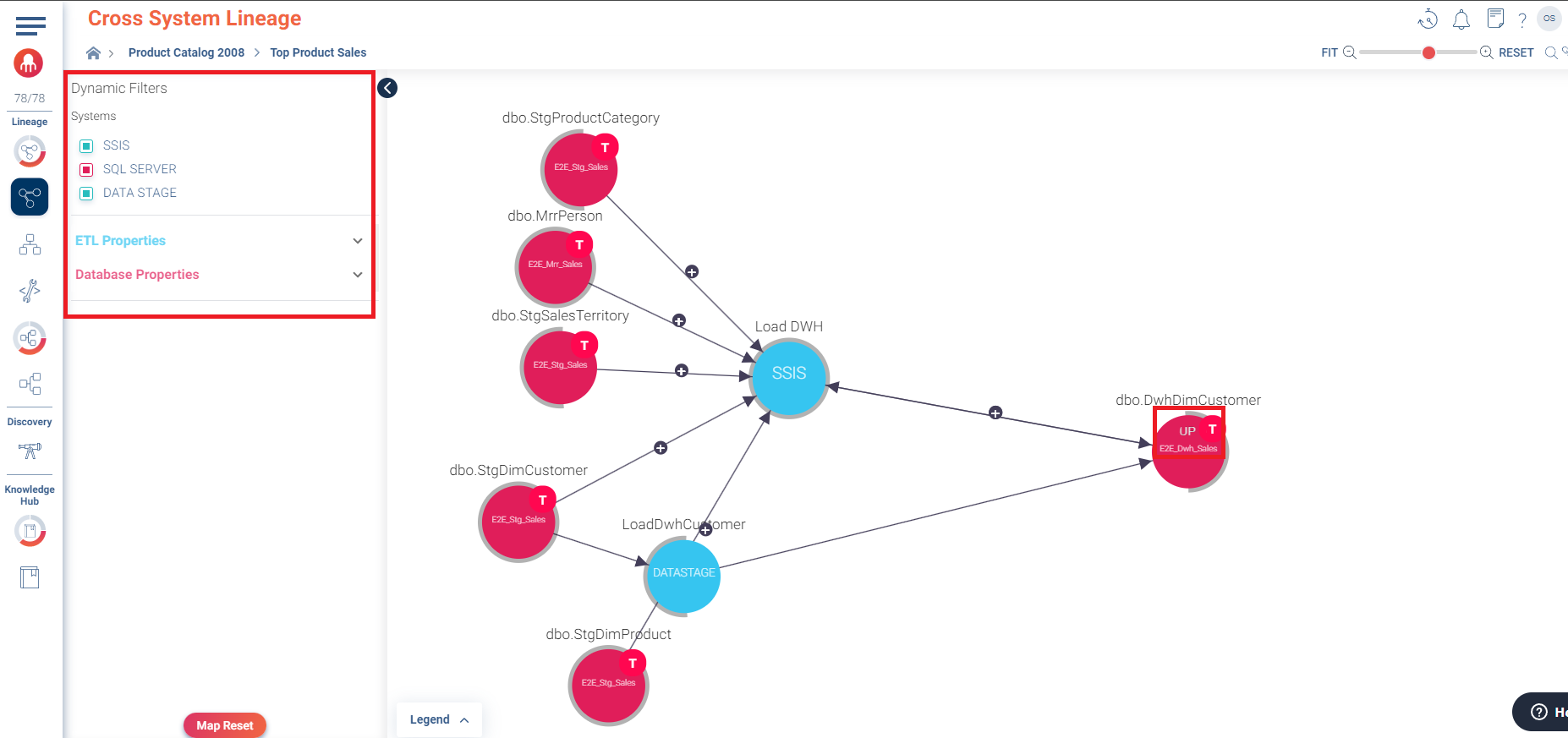
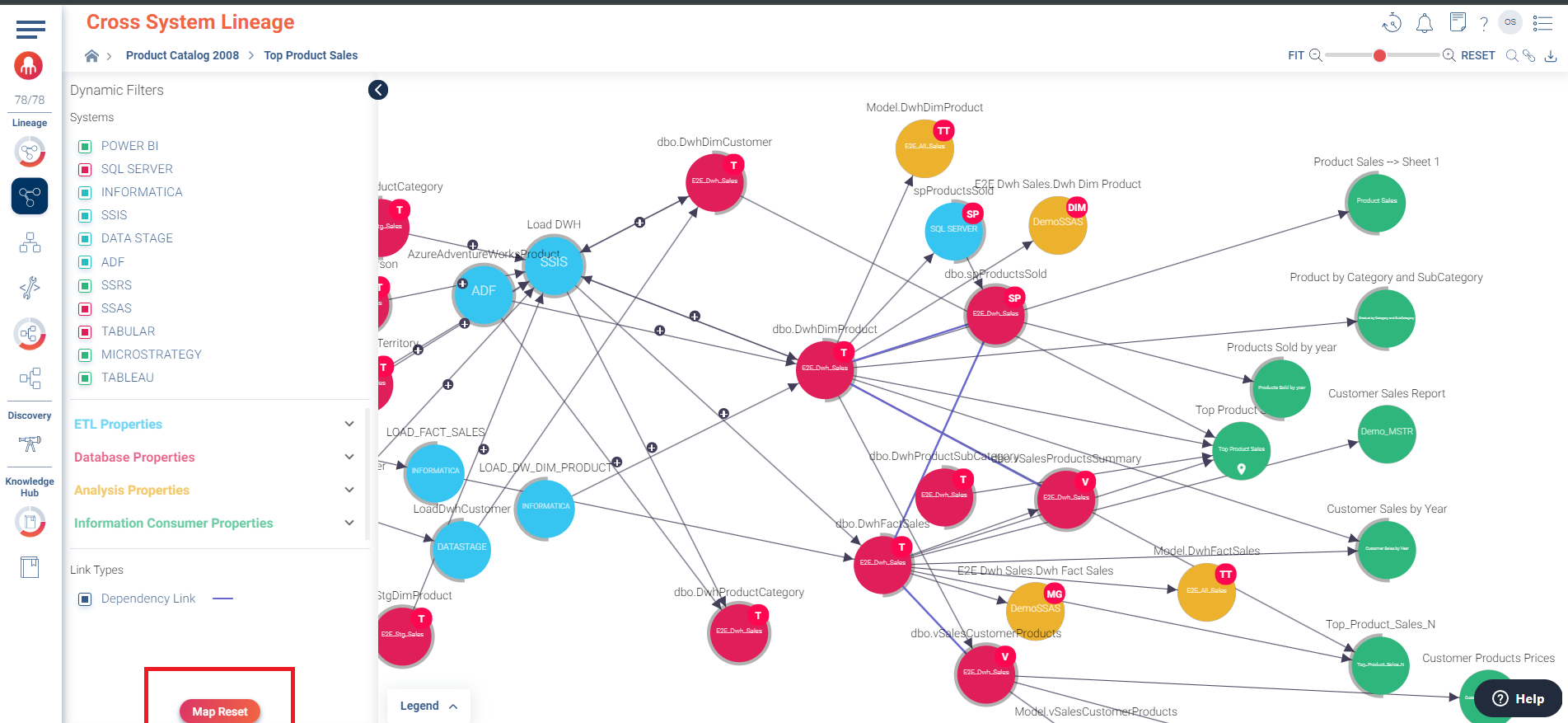
Dynamic filters integration: The dynamic filters allow you to narrow down the analysis, focusing on specific areas of interest. This combination enables you to conduct a thorough impact analysis in minutes, ensuring you only view the most relevant data. A Map Reset action will restore the map and the UP/DN analysis.
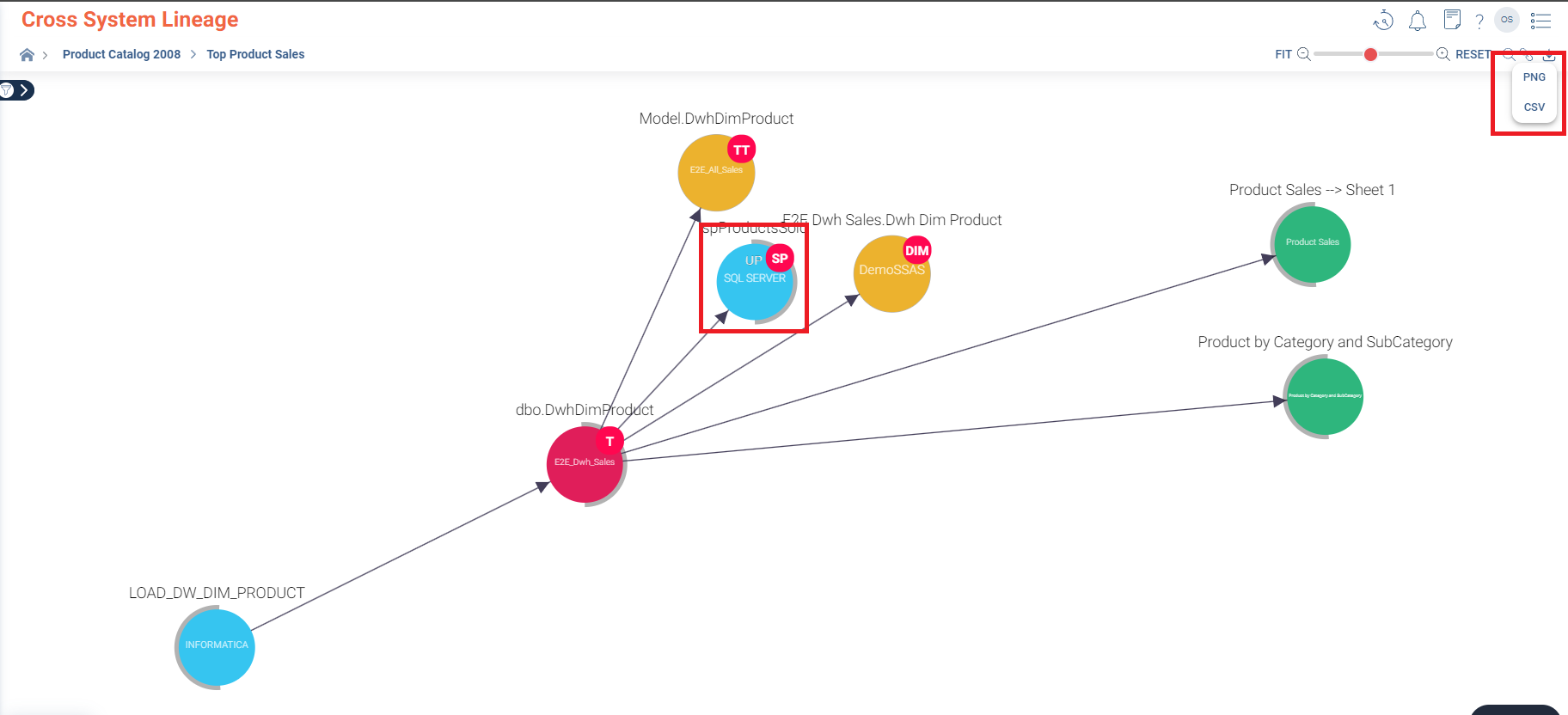
Exporting capabilities: To support change management and ticket resolution processes, you can now download the impact analysis results as a PNG or CSV file. This makes it easy to share insights with stakeholders and maintain records for compliance or further review.