Behavioral Changes in Apache Ranger

Learn about the change in certain functionality of Apache Ranger that has resulted in a change in behavior from the previously released version to this version of Cloudera Runtime.

Summary:

Policy resources in the Ranger Admin UI are being added using React JS instead of Backbone JS

Previous behavior:

Earlier with Backbone JS, when you copied and pasted resource values containing commas or spaces (for example, in Hive policy resources: database1, database2), the UI automatically split them into separate values — database1 and database2. The same behaviour applied to space-separated values. Because of this, you were not allowed to enter resource names containing commas and spaces, and this limitation affected all service policy resources.

New behavior:

After upgrading from Backbone JS to React JS, this restriction has been removed. Now, React JS treats pasted values with commas or spaces as a single entry. Hence, you can no longer paste multiple values at once; you must manually add each resource value.

Summary:
Added support for Ranger TagSync and UserSync HA
Previous behavior:

In versions < 7.1.9, port information for UserSync and Tagsync was not visible nor configurable.

New behavior:
In version 7.1.9 +, UserSync and TagSync port numbers are available at Cloudera Manager > Ranger > Configuration.

For example:

  1. In Configuration > Filters, highlight Ranger TagSync. Then, in Search, type http:

    The following, configurable settings are now available:

    Figure 1. Ranger TagSync port settings
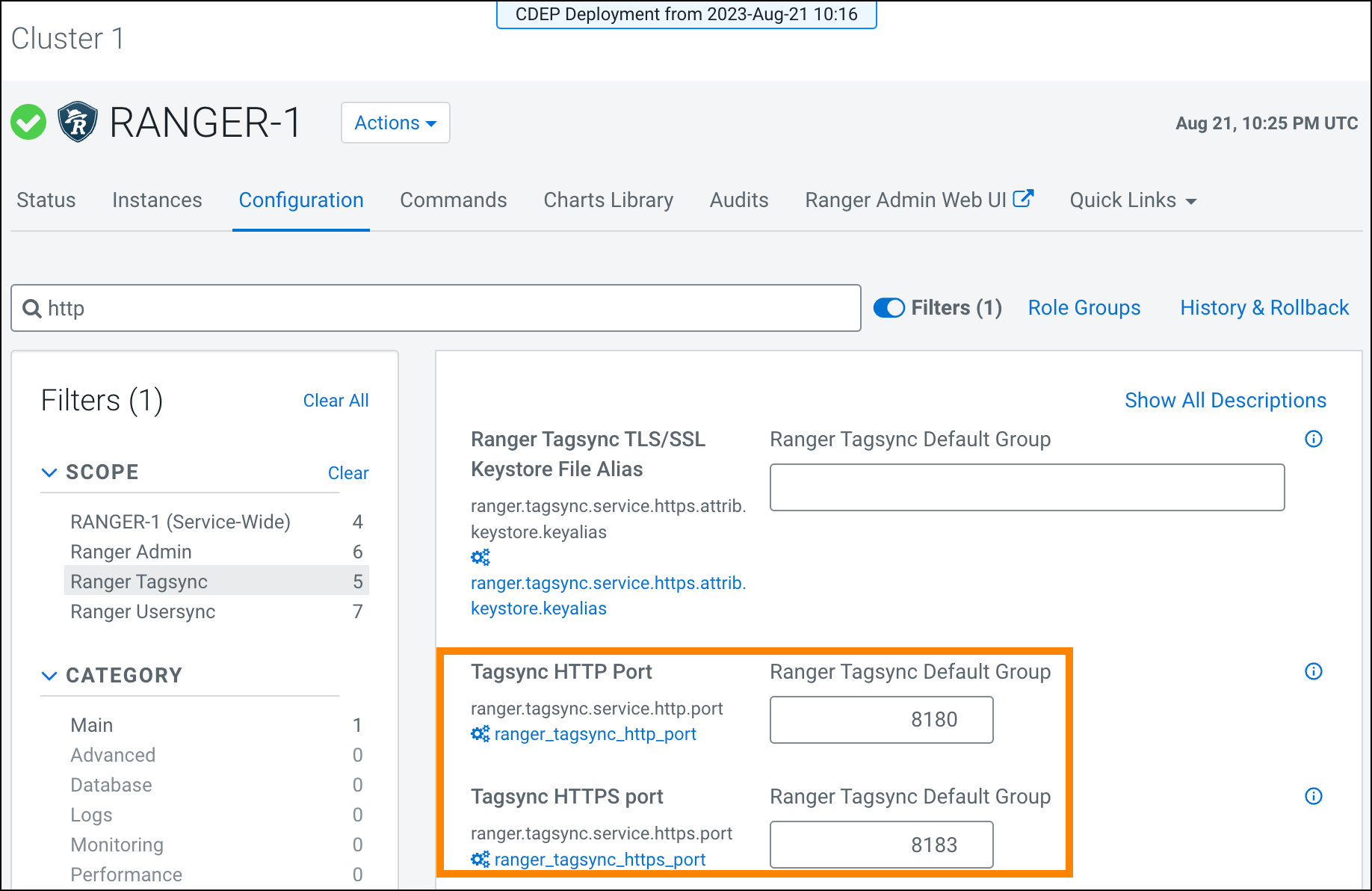
    Ranger TagSync port settings
  2. In Configuration > Filters, highlight Ranger UserSync. Then, in Search, type http:

    The following, configurable settings are now available:

    Figure 2. Ranger UserSync port settings
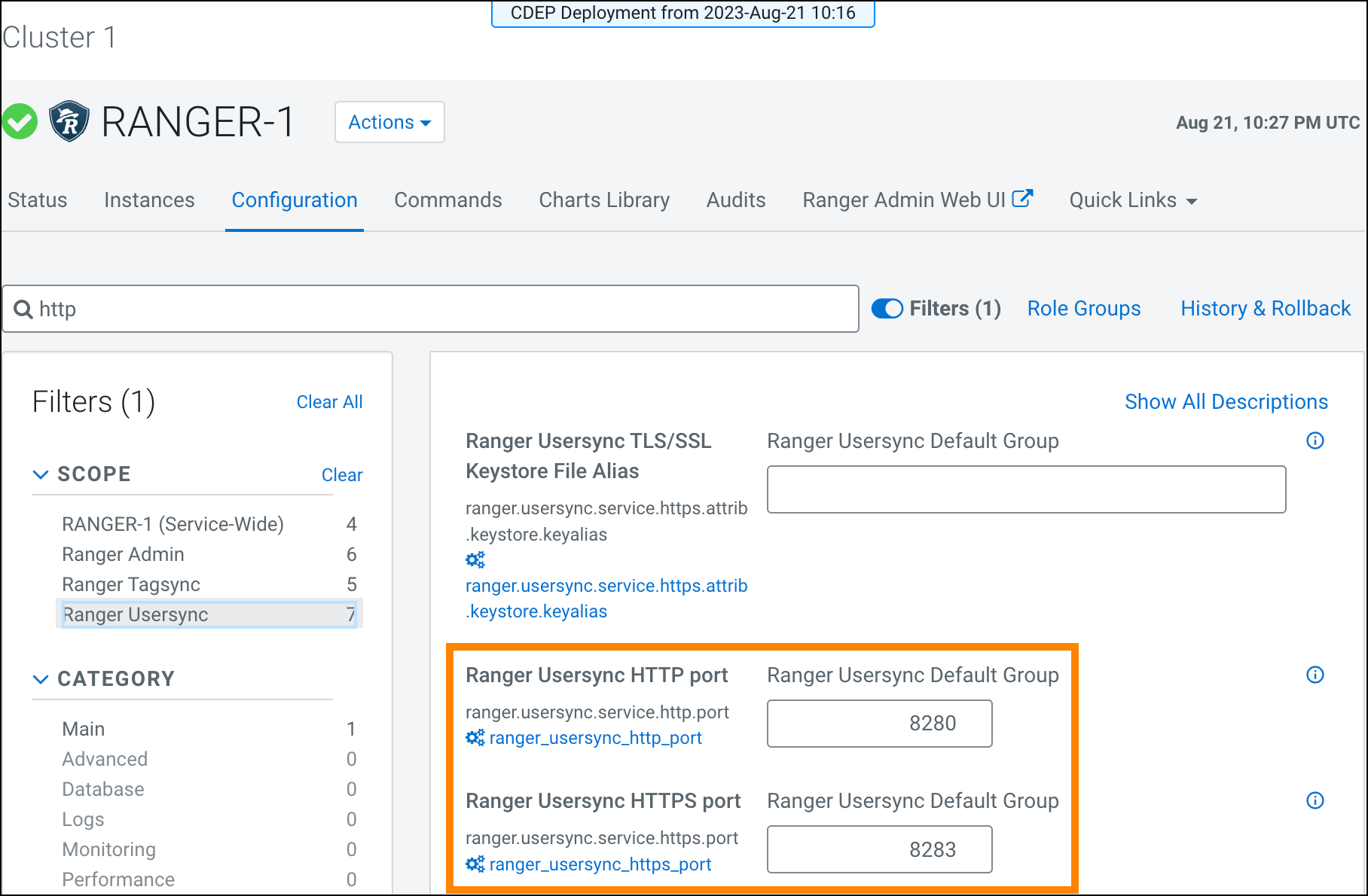
    Ranger UserSync port settings

    For more information, see Configuring Ranger UserSync and Tagsync High Availability.
